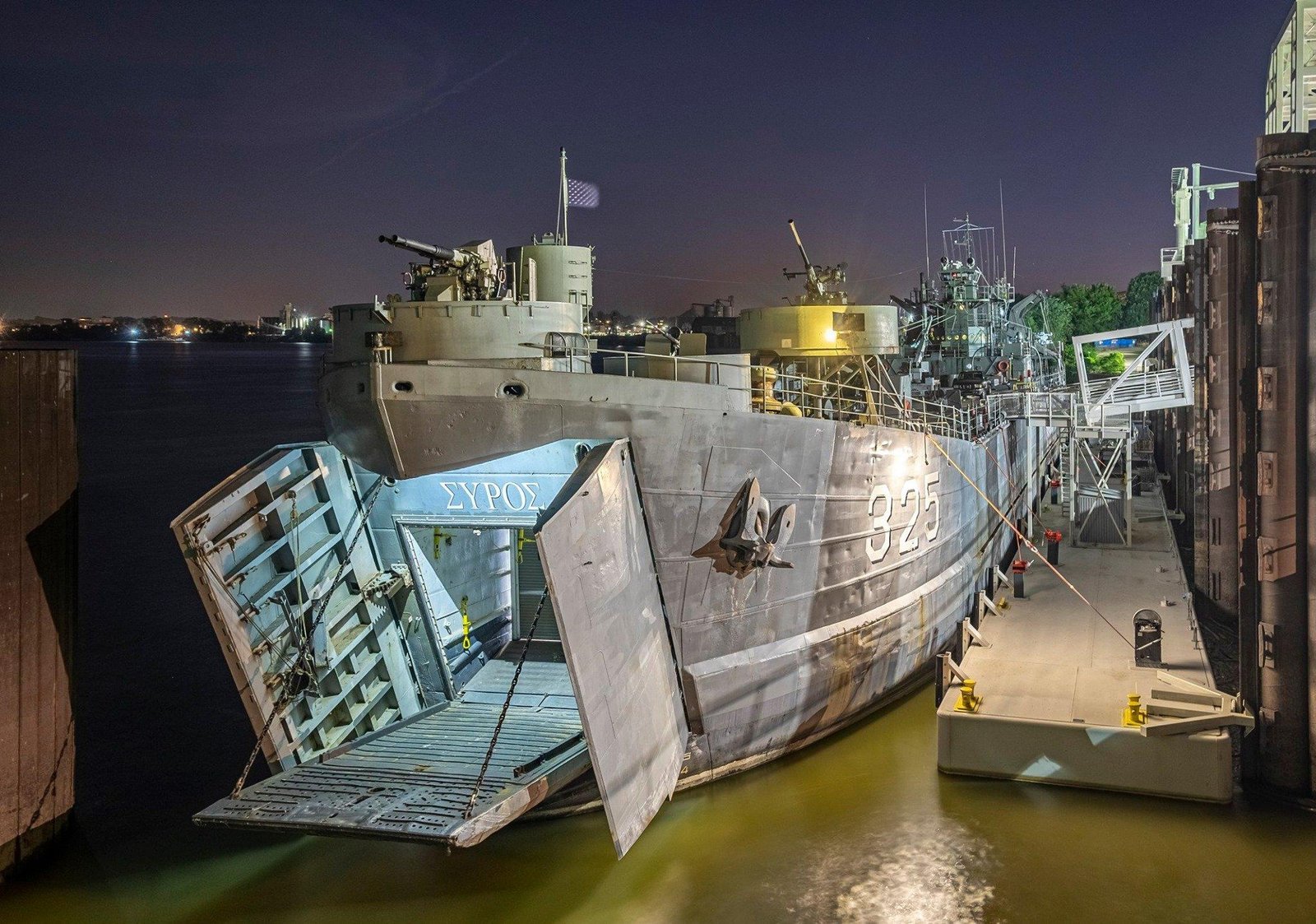
The LST-325, a World War II-era Landing Ship, Tank (LST), will be at Sanders Ferry Park 513 Sanders Ferry Rd, Hendersonville TN 37075 from September 23-29th, 2026
The Sumner County Amateur Radio Association and Sumner County Amateur Emergency Service were asked to provide support for the event. Support consists of assisting with vehicle parking and transporting visitors with mobility issues on a 6-passenger golf cart. The event runs from 0900-1700 daily. Support is required from 0830 to approx. 1500 daily. Lunch and access to both the ship and the onboard radio room for radio operation is included. Dinner may also be available each day around 1800 hours if stay. The event staff are requesting 2-4 Radio Operators each day with emphasis on Saturday and Sunday, 9/26 and 9/27. Radio Operators will be required to wear the SCARES safety vest for visibility and identification for access to the ship. We have extras if needed. We will also be operating a club informational table if we have enough personnel. This is the first time that the LST is in Hendersonville and can be considered historic. Anyone who is willing to offer their time in support of some US and WWII History please contact Brian, NG2S, at ng2s@sumnerradio.org or 516-318-1998.
LST-325 History
USS LST-325 is a World War II–era Landing Ship, Tank (LST) and one of the best-preserved examples of the ships that carried troops, tanks, trucks, ammunition, and other equipment directly onto invasion beaches.
Built at the Philadelphia Navy Yard in 1942, LST-325 was commissioned into the U.S. Navy on February 1, 1943. The LST design allowed the approximately 300-foot ship to deliberately beach itself, open its large bow doors, lower a ramp, and unload vehicles and troops directly onto shore.
World War II
LST-325 was sent to the European Theater and participated in several major Allied amphibious operations. She took part in the invasion of Sicily in July 1943, operations associated with the Italian campaign, and most famously the Normandy invasion in June 1944.
During the D-Day period, LST-325 made repeated trips across the English Channel, bringing men, vehicles, ammunition, fuel, and supplies to Normandy and carrying wounded personnel back to England. LSTs were essential to sustaining the Allied armies after the initial landings because they could unload directly onto beaches before adequate port facilities were available.
After WWII
Following the war, LST-325 was placed in reserve. She was later returned to service with the Military Sea Transportation Service (MSTS) during the 1950s. In that role she transported supplies supporting construction and operation of the DEW Line radar stations in Canada and Greenland during the early Cold War.
After leaving U.S. service in 1961, the ship was eventually transferred to the Greek Navy, where she became L-144 Syros in 1964. She remained in Greek service for decades before being decommissioned in 1999.
Bringing LST-325 Home
A group of American veterans and supporters acquired the ship and undertook the remarkable task of bringing her back across the Atlantic to the United States in 2000–2001. She eventually established her permanent home in Evansville, Indiana, a particularly fitting location because Evansville’s WWII shipyard constructed 167 LSTs, making it the country’s largest inland producer of oceangoing ships during the war. Interestingly, LST-325 herself was not built in Evansville—she was built in Philadelphia.
Today, LST-325 is a floating museum and the only operational LST in WWII configuration afloat in U.S. waters. She is listed on the National Register of Historic Places and, unlike most museum ships, she still gets underway for annual cruises to other American river cities.
And there’s a timely connection for you: LST-325 is currently on her 2026 cruise to Tennessee. She departed Evansville on September 19 and is scheduled to be open for tours in Hendersonville September 23–29, Ashland City October 1–6, and Clarksville October 8–12.
Official USS LST-325 Ship Memorial